
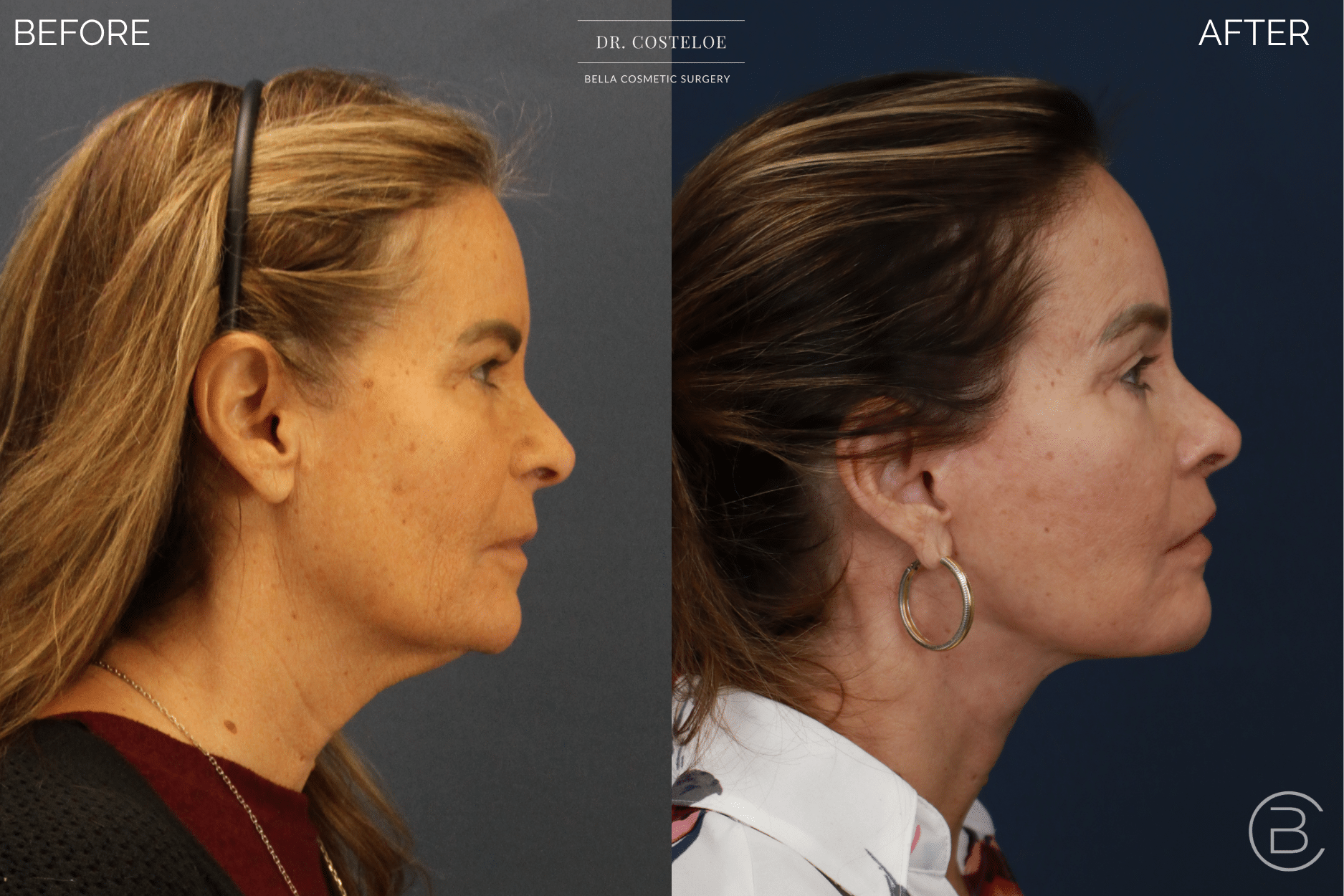
A deep plane facelift can help lift sagging facial tissue, soften deep folds, improve jowls, and create a smoother transition between the face and neck.
Dr. Anya Costeloe performs facial procedures for patients in Alexandria, Virginia, and the greater Washington DC metro area. She has spent her career focused on the face, head, and neck, with fellowship training in Facial Plastic and Reconstructive Surgery under leaders in deep plane facelift surgery and facial rejuvenation.


What Is a Deep Plane Facelift?
A deep plane facelift is an advanced facelift technique that lifts the deeper layers of the face rather than relying on skin tightening alone.
Facial aging often involves changes in the midface, cheeks, jowls, jawline, and neck. The deep plane technique targets these underlying structures to improve visible signs of aging at their source.
This procedure may help improve:
- Formation of jowls
- Deep nasolabial folds
- Marionette lines
- Sagging cheeks
- Loss of cheek support
- Loose skin along the jawline
- A less defined neck and lower face
Who Is a Good Candidate for a Deep Plane Facelift?
You may be a good candidate for a deep plane facelift if you want surgical facial rejuvenation and have visible aging in the cheeks, jawline, lower face, or neck.
Good candidates often have:
- Facial sagging: Cheeks, jowls, or lower facial tissue have shifted downward.
- Deep folds: Nasolabial folds or marionette lines have become more noticeable.
- Jawline changes: The lower face has lost definition.
- Neck laxity: Loose skin or banding affects the neck area.
- Realistic goals: You want visible improvement while keeping your features recognizable.
- Good overall health: You can safely undergo surgery and recovery.
A consultation with Dr. Costeloe can help determine whether this procedure fits your goals.
What to Expect During Your Consultation
Your deep plane facelift consultation gives you time to discuss your concerns, goals, medical history, and questions with Dr. Costeloe. She will examine your facial anatomy, skin quality, deeper tissue support, and neck structure.
She will explain whether a deep plane facelift suits your needs or whether another approach may serve you better. You will also learn about incision placement, anesthesia, recovery, risks, and expected results.
Deep Plane Facelift Recovery
Most patients plan for two to three weeks of downtime after a deep plane facelift. Swelling, bruising, tightness, and temporary numbness can occur during the early recovery period.
You will need to keep your head elevated, avoid strenuous activity, and follow your post-operative instructions closely.
You may feel ready to return to light daily activities within one to two weeks, though visible swelling can take longer to fade. Your final results will continue to settle over several months.
Why Choose Bella Cosmetic Surgery for a Deep Plane Facelift?
Bella Cosmetic Surgery has served patients throughout Maryland, Washington DC, and Northern Virginia since 2001. Dr. Anya Costeloe performs facial procedures with a focus on facial balance, safety, and individualized planning. All surgical procedures take place at Harbor Surgery Center, a fully accredited ambulatory surgical facility.
Dr. Costeloe specializes in cosmetic and reconstructive surgery of the face, head, and neck. She completed five years of surgical training in Otolaryngology-Head and Neck Surgery at Michigan State University, followed by fellowship training in Facial Plastic and Reconstructive Surgery in San Francisco with leaders in facial rejuvenation, rhinoplasty, and deep plane facelift techniques. She has authored peer-reviewed articles, presented at national meetings, and participates in humanitarian facial surgery work through the FACE TO FACE program.
With this advanced facial training and a patient-first approach, Dr. Costeloe will help you understand your options and choose a surgical plan that fits your goals and comfort level.
FAQs
How Is a Deep Plane Facelift Different From a Traditional Facelift?
A traditional facelift often lifts or tightens the SMAS layer, while a deep plane facelift releases deeper facial ligaments and repositions the cheek, jawline, and lower face together. This can help create a smoother, less tight-looking result.
Will a Deep Plane Facelift Treat My Neck?
A deep plane facelift often improves the lower face and neck, especially when jowls and neck laxity occur together. Dr. Costeloe will examine your neck during your consultation and explain whether you need added neck work.
Where Are Deep Plane Facelift Incisions Placed?
Incisions often begin near the temple, continue around the ear, and extend into the hairline. Dr. Costeloe plans incision placement carefully so scars can fade and remain discreet over time.
How Soon Will I See My Final Results?
You will see improvement once early swelling and bruising fade, but your results continue to settle over several months. Scar maturation can take up to one year.
Schedule a Visit for a Deep Plane Facelift Near Alexandria, VA
A deep plane facelift can help refresh the lower face, cheeks, jawline, and neck while preserving your recognizable features.
To meet with Dr. Costeloe at Bella Cosmetic Surgery near Alexandria, VA, call 301-567-6767 to schedule a visit.
